Sprungmenü:

Object description:
Small palaces at Nymphenburg Palace Park – Munich
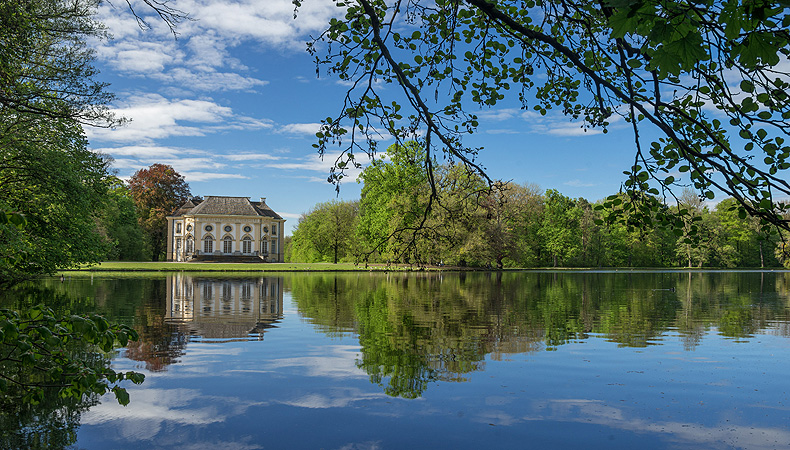
Amalienburg, Badenburg, Pagodenburg, Magdalenenklause (Hermitage)
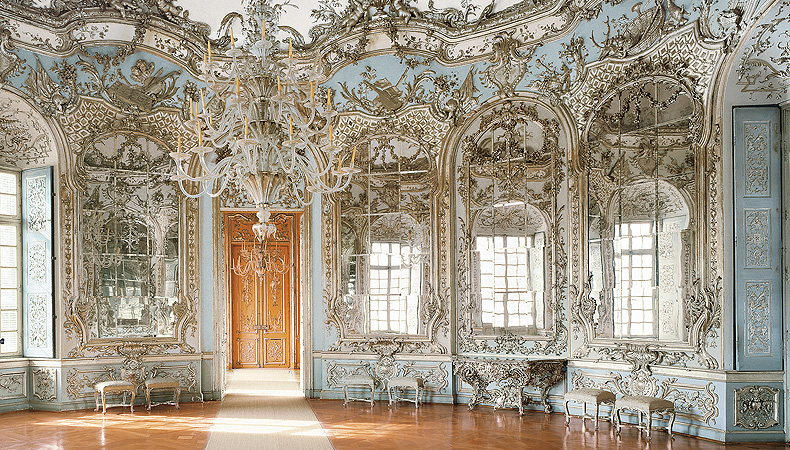
The Amalienburg, designed by François Cuvilliés, was built from 1734 to 1739 in the Nymphenburg Park. The little hunting lodge created for Electress Amalia with its unique Hall of Mirrors is a masterpiece of european Rococo architecture.
The other three park buildings were built in the beginning of the 18th century by Joseph Effner for Elector Max Emanuel.
The Badenburg features a banqueting hall that boasts some magnificent stucco work and ceiling frescoes (Jacopo Amigoni, destroyed in 1944, subsequently restored), a two-storey Bathing Hall and and the so-called "Monkey Cabinet". Four of its rooms are decorated with Chinese wallpaper.
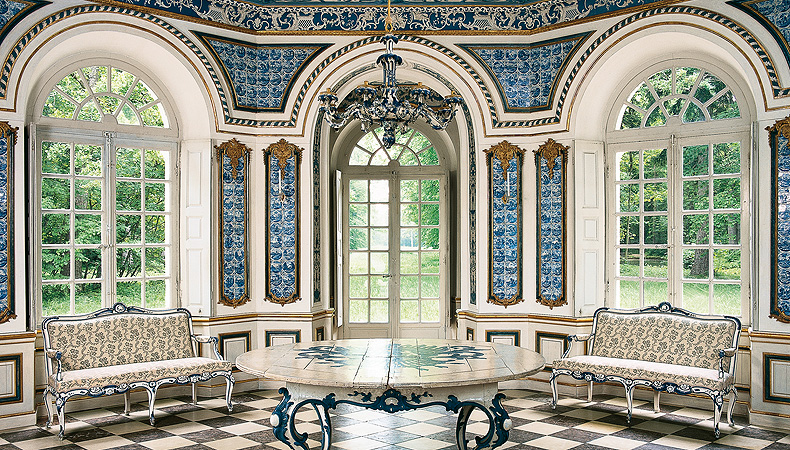
In the octagonal Pagodenburg, European and Oriental decorative elements combine to create an exotic atmosphere. The small palace is a prime example of eighteenth-century chinoiserie which was very much in vogue at the time.
The Magdalenenklause is the court equivalent of a hermitage: built as an artificial ruin, it has a chapel designed as a grotto and living rooms of monastic simplicity.
Nymphenburg Palace
Marstallmuseum and
Museum of Nymphenburg Porcelain
Nymphenburg Palace Park
Address
Schloss Nymphenburg,
Eingang 1
80638 München
089 17908-0
www.schloss-nymphenburg.de
Opening hours
April-15 October:
9 am-6 pm
open daily
closed
16 October-March
Guided tours
Admission fees 2024
Ticket "Park palaces"
(Amalienburg/ Badenburg/ Magdalenenklause, Pagodenburg)
5 euros regular
4 euros reduced
Combination ticket "Nymphenburg"
(Nymphenburg Palace +
Park palaces +
Marstallmuseum)
1 April-15 October:
15 euros regular
13 euros reduced
16 October-March
(without park buildings):
12 euros regular
10 euros reduced
Tickets for the Nymphenburg palace complex are also available online in our ticket shop.
Children under 18 are admitted free of charge.
Accessibility
Getting here / parking
Munich
www.bahn.com
Tram to 'Romanplatz',
bus or tram to 'Schloss Nymphenburg'
450 car parking spaces, 14 bus parking spaces available
Further information
Service (leaflets, photo/film, links…)
Shop at the palace
www.kulturgut.de
Schlosswirtschaft Schwaige
089 12020890
www.schlosswirtschaft-schwaige.de
Café im Palmenhaus
089 175309
palmenhaus.de
die FASANERIE
Hartmannshofer Straße 20
80997 München
089 92284-600
www.fasanerie.de
Taxisgarten
Taxisstraße 12
80637 München
089 156827
www.taxisgarten.de
Administrative office
Schloss- und Gartenverwaltung Nymphenburg
Schloss Nymphenburg,
Eingang 19
80638 München
089 17908-0
Fax 089 17908-627
sgvnymphenburg@ bsv.bayern.de
www.schloss-nymphenburg.de

Facebook Instagram YouTube